
Why 304 Stainless Steel Is the Industry Standard for Commercial Kitchen Equipment
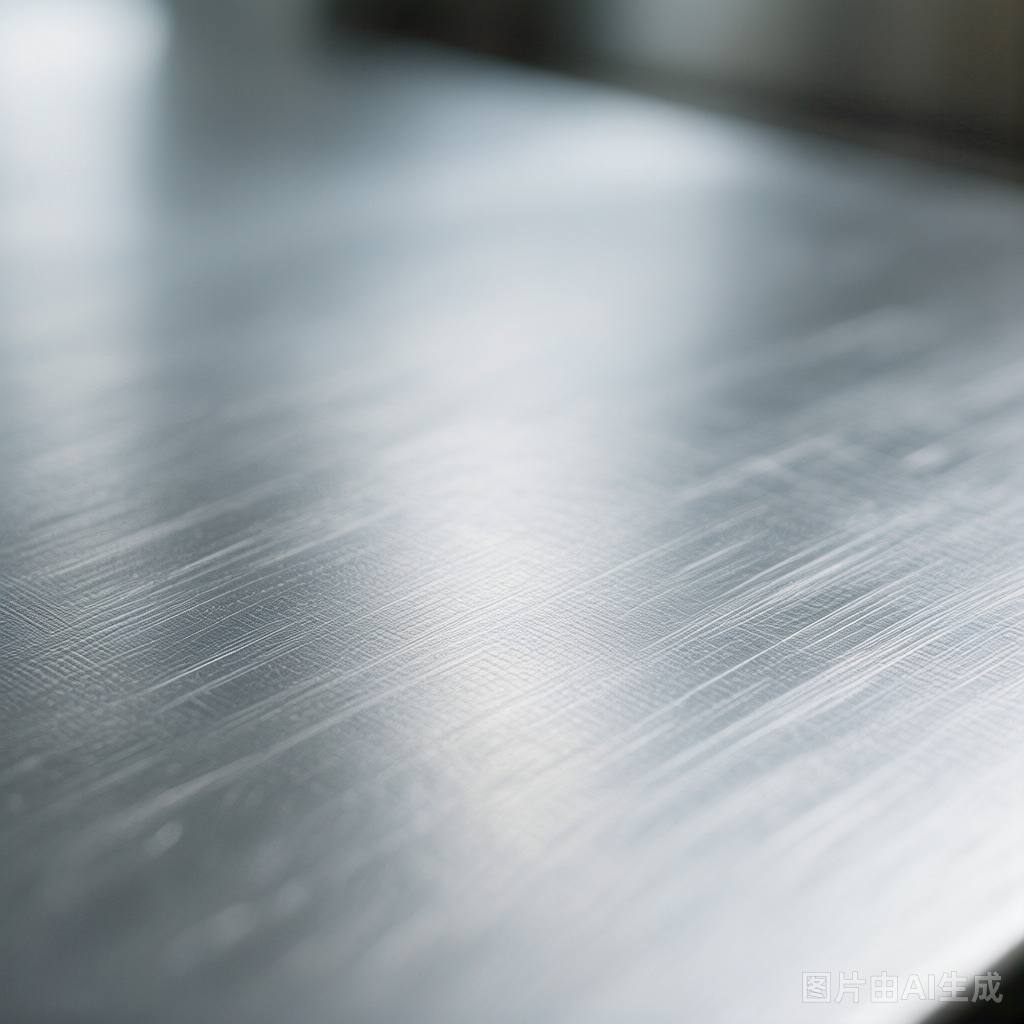
If you work in the commercial kitchen industry, you have likely heard the term "304 stainless steel" more times than you can count. It is the most widely used stainless steel grade in the world, and for good reason. But what exactly makes 304 the go-to material for commercial kitchen equipment, and how does it compare to other grades? This guide breaks down the facts.
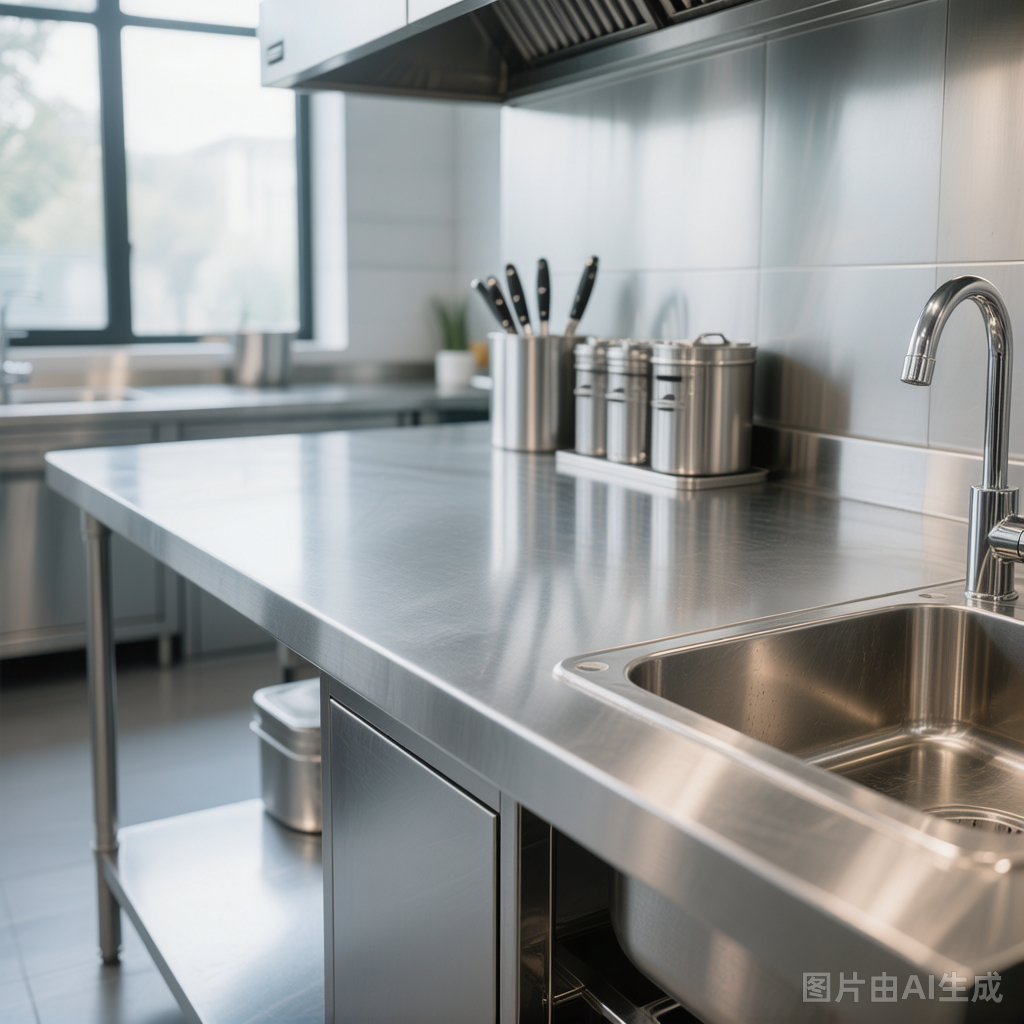
What Is 304 Stainless Steel?
304 stainless steel (UNS S30400), also known as 18/8 stainless steel, is an austenitic alloy containing approximately 18% chromium and 8% nickel. It belongs to the American standard AISI 300 series and is the most commonly specified stainless steel for food contact surfaces and kitchen fabrication.
Its Chinese equivalent is 06Cr19Ni10 (GB standard, formerly 0Cr18Ni9), the European equivalent is X5CrNi18-10 (1.4301), and the Japanese equivalent is SUS304.
Chemical Composition (ASTM A240)
The table below shows the chemical composition requirements for 304 stainless steel sheet and plate per ASTM A240:
| Element | Percentage (%) |
|---|---|
| Chromium (Cr) | 17.5 – 19.5 |
| Nickel (Ni) | 8.0 – 10.5 |
| Carbon (C) max | 0.07 |
| Manganese (Mn) max | 2.00 |
| Silicon (Si) max | 0.75 |
| Phosphorus (P) max | 0.045 |
| Sulfur (S) max | 0.030 |
Why Commercial Kitchens Choose 304 Stainless Steel
1. Excellent Corrosion Resistance
The chromium content in 304 stainless steel forms a passive layer of chromium oxide on the surface, which protects the underlying metal from rust and corrosion. This self-healing oxide layer makes 304 highly resistant to food acids, cleaning chemicals, and moisture — all of which are present daily in commercial kitchens.
2. Food Safety and Hygiene
304 stainless steel is classified as food grade stainless steel and meets FDA and EU food contact material regulations. Its non-porous surface prevents bacterial growth and is easy to clean and sanitize. This is why 304 is the standard material for commercial kitchen sinks, work tables, food preparation counters, and shelving.
3. Strength and Durability
304 stainless steel offers a tensile strength of ≥515 MPa and a yield strength of ≥205 MPa in the annealed condition (per ASTM A240). It can withstand heavy daily use, impacts, and thermal cycling without deformation. Its density is 7.93 g/cm³, giving it excellent structural rigidity for kitchen equipment.
4. Heat Resistance
304 stainless steel can withstand intermittent temperatures up to 870 °C and continuous service up to 925 °C. This makes it suitable for equipment near cooking zones, ovens, and steamers — common in any professional kitchen layout.
5. Fabrication Flexibility
304 stainless steel has excellent formability and weldability. It can be laser-cut, CNC-bent, deep-drawn, roll-formed, and welded without losing its corrosion resistance (provided proper post-weld treatment). This flexibility allows manufacturers to produce complex kitchen equipment designs efficiently.

Surface Finishes for Commercial Kitchen Equipment
304 stainless steel is available in several standard surface finishes (per ASTM A480), each suited for different kitchen applications:
| Finish | Description | Typical Kitchen Use |
|---|---|---|
| 2B | Cold-rolled, annealed, lightly skin-passed | Commercial sinks, prep tables, backsplashes |
| BA | Bright annealed for a reflective surface | Decorative panels, display shelving |
| No.4 | Ground with 120-180 grit abrasive | Worktable tops, countertops (wear-resistant) |
| HL (Hairline) | Continuous brushing for a directional grain | Bar fronts, cabinet doors, exterior panels |
For most commercial kitchen work surfaces, No.4 finish is preferred because it hides scratches well and provides a matte, non-glare surface. 2B finish is commonly used for sink bowls and back-of-house equipment where cost efficiency matters.
304 vs 316 vs 430: Which Grade to Choose?
When sourcing stainless steel kitchen equipment, buyers often compare these three common grades. Here is a practical comparison:
| Property | 304 (18/8) | 316 (18/10/2 Mo) | 430 (Ferritic) |
|---|---|---|---|
| Corrosion Resistance | ★★★★ Excellent | ★★★★★ Superior | ★★★ Good (limited) |
| Salt Resistance | Moderate | Excellent (Mo content) | Low |
| Tensile Strength | ≥515 MPa | ≥515 MPa | ≥450 MPa |
| Magnetic | No (austenitic) | No (austenitic) | Yes (ferritic) |
| Food Grade | Yes | Yes | Limited |
| Relative Cost | Baseline | ~60-80% higher | ~30-40% lower |
| Best For | Most commercial kitchens | Coastal/high-salt environments | Non-food-contact parts |
Our recommendation: For the vast majority of commercial kitchen applications — sinks, work tables, shelving, preparation counters, and bar equipment — 304 stainless steel provides the optimal balance of corrosion resistance, strength, food safety, and cost. Reserve 316 for coastal hotels or high-humidity environments, and 430 only for internal structural parts that do not contact food.

Why Xinhuili Metal Uses 304 Stainless Steel
At Xinhuili Metal, we manufacture our commercial kitchen equipment using high-quality 304 stainless steel sourced from reputable Chinese mills. Our fabrication process includes:
- Laser cutting with 10,000W high-power machines for precision edges (±0.1 mm tolerance)
- CNC bending with consistent accuracy for repeatable quality across production runs
- Professional welding (laser welding and TIG) with post-weld passivation to restore corrosion resistance
- Surface finishing to meet your specified grade — No.4 for worktops, 2B for sinks, HL for decorative panels
With over 35 years of stainless steel fabrication experience, we ensure every piece of equipment meets international standards for durability, hygiene, and performance.
Conclusion
304 stainless steel remains the material of choice for commercial kitchen equipment manufacturers and buyers worldwide. Its proven combination of corrosion resistance, food safety, mechanical strength, and cost-effectiveness makes it the default specification for everything from hotel kitchen projects to small restaurant setups.
When sourcing kitchen equipment, always verify that the material grade is 304 (18/8) stainless steel — it is the industry standard for a reason.
For more information about our 304 stainless steel kitchen equipment, browse our product range or contact our team for a quote.